
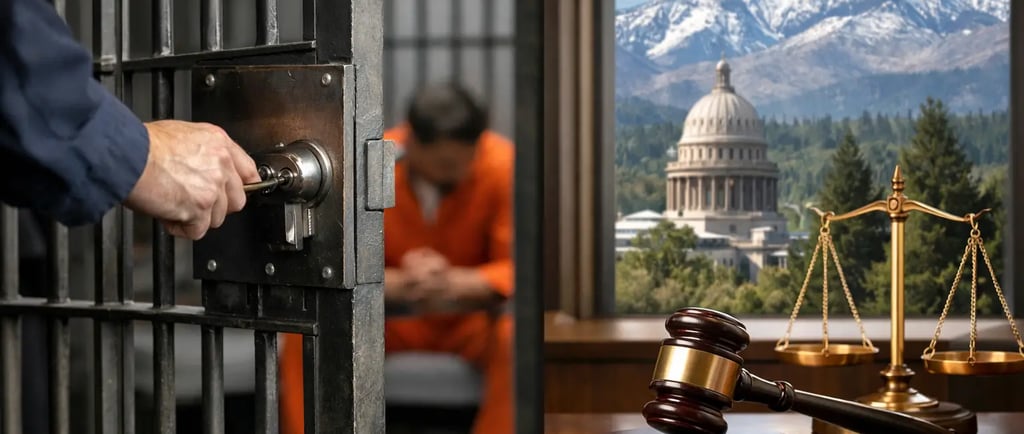
A late-night arrest turns everything urgent fast. One of the first questions families ask is when can bail be denied, because the answer affects whether someone comes home quickly or stays in custody while the case moves forward.
In Idaho, bail is common, but it is not automatic in every situation. A judge looks at the charge, the person’s record, the safety of the community, and the risk that the defendant will not come back to court. That means two people arrested on different facts can get very different results. If you are trying to help someone right now, it helps to understand where the line is between a bond being set and bail being denied altogether.
When can bail be denied?
Bail can be denied when the court believes release would create a serious problem that conditions of release cannot reasonably fix. Usually that comes down to public safety, flight risk, or the nature of the offense itself. In some cases, the law gives the court broader authority to hold a person without bail, especially when the charge is very serious.
This is where people often get confused. Bail denial is not the same as bail being set too high. If the court sets a large bond amount, release is still legally possible if the bond can be posted and conditions are met. If bail is denied, the person stays in jail unless the court later changes that decision.
For families, that difference matters. It affects whether you are preparing to arrange a bond right away or whether you need to wait for another hearing and legal argument.
The main reasons bail may be denied in Idaho
A judge does not deny bail just because an arrest happened. The court usually wants a clear reason supported by the charge, the facts, and the person’s background.
Serious violent charges
If someone is accused of a violent felony or a crime that suggests a real threat to another person, the court may decide release is too risky. That is especially true if the allegations involve weapons, serious bodily injury, repeated violence, or threats toward a specific victim.
Domestic violence cases can also lead to stricter release decisions, particularly when there is a history between the parties or a concern that no-contact orders will not be followed. In some cases, the court may still allow release, but only with tight conditions like GPS monitoring, third-party supervision, or strict stay-away terms.
High flight risk
Courts want to know whether the defendant will return for future hearings. If the judge believes the person is likely to run, bail can be denied or set under very restrictive conditions.
Flight risk is not just about leaving the state. A history of missing court dates, past failures to appear, using false names, unstable housing, or strong ties somewhere else can all raise concern. On the other hand, steady work, family ties, and a long history in the community may help support release.
Prior violations of release conditions
If someone has been given a chance before and ignored court orders, the judge may be less willing to allow release again. That can include cutting off GPS monitoring, violating no-contact orders, picking up new charges while already out on bond, or repeatedly missing check-ins.
This is one of those areas where the facts matter a lot. A single older mistake may be treated differently from a recent pattern of noncompliance.
Capital or exceptionally serious charges
In the most serious cases, courts may have stronger grounds to deny bail. The higher the potential penalty and the more severe the allegations, the more closely the court examines whether any release condition would really protect the public and secure the person’s return.
Not every serious felony leads to bail denial. But as the stakes rise, judges tend to be more cautious.
What judges look at before denying bail
When people ask when can bail be denied in real life, the answer usually comes down to a short list of practical questions judges ask at the hearing.
First, how serious is the current charge? Second, what does the person’s criminal and court history look like? Third, is there a specific safety concern if release is allowed? Fourth, are there conditions that could reduce the risk enough to make release reasonable?
That last point is important. Courts often prefer conditions over outright denial when conditions can work. That may include supervised release, electronic monitoring, drug testing, travel restrictions, mental health treatment requirements, or no-contact orders. If the judge believes those tools are enough, bail may be granted even in a difficult case.
If the judge believes those tools are not enough, bail can be denied.
Bail denied versus bond delayed
Families sometimes hear that a loved one is not getting out "yet" and assume bail has been denied. That is not always true.
Sometimes release is delayed because the person has not had the first hearing yet. Sometimes a hold from another county, another state, probation, parole, or immigration creates a separate problem. In other cases, the court may require conditions to be arranged first, such as GPS setup or approval of a third-party custodian.
So before assuming the worst, it helps to find out whether the issue is an actual no-bail order or a temporary delay tied to procedure, another warrant, or additional requirements.
Can bail be denied for a misdemeanor?
Usually, misdemeanor cases are more likely to result in a bond amount or recognizance release rather than outright denial. But that does not mean denial never happens.
If the person has a long pattern of failures to appear, repeated new arrests, or facts showing a real danger to another person, the court may take a harder line. This is especially true when a misdemeanor case involves domestic violence, stalking behavior, or repeated violations of court orders.
So the level of the charge matters, but it is not the only factor.
What families can do if bail is denied
A bail denial does not always mean the door is permanently closed. In some cases, the defense can ask the court to review the issue again, especially if more information becomes available about housing, treatment, supervision, work history, or family support.
That is why documentation matters. Proof of stable residence, local family ties, employment, and a workable supervision plan can sometimes help shift the court’s view. If the concern is safety, detailed release conditions may be part of the solution. If the concern is flight risk, showing real community connections can matter.
Families should also make sure they understand whether there are multiple holds or only one issue. A person may be eligible for bond on one case but still remain in custody because of another court matter.
And if the court does set bail after all, speed matters. In those moments, working with an experienced local bondsman who understands the jail process, court timelines, and release requirements can make a stressful situation move faster.
Common misunderstandings about bail denial
One of the biggest misunderstandings is that bail denial means guilt. It does not. Bail decisions are about pretrial release, not whether the person will ultimately be convicted.
Another misunderstanding is that a high bond and a no-bail hold are the same thing. They are not. A high bond may still allow release if the terms can be met. A no-bail decision means release is not currently available through bonding.
People also assume judges only look at the current arrest. In reality, they often look at patterns. A lower-level charge with a bad history can create more trouble than people expect, while a serious charge with strong community support and no prior issues may still result in release with conditions. It depends on the total picture.
Why local guidance matters
Bail hearings move fast, and families are usually trying to understand the system while under pressure. Knowing whether a person is actually bondable, what conditions may apply, and what steps can happen next makes a real difference.
That is especially true in Idaho, where county procedures, jail timelines, and court practices can affect how quickly things move. A local team like Idaho Bonding Company cannot change a judge’s no-bail order, but when bond is available, experienced guidance helps families act quickly and avoid costly confusion.
If you are facing this situation right now, the most useful next step is to get clear information on the exact hold, the hearing status, and whether the court left any path open for release. That clarity gives you something solid to work with when everything else feels uncertain.
Contact us!
Local • Reliable • Experienced • Fast
Contact us anytime at 208-890-2339 or info@idahobondingcompany.com
We proudly serve Boise, Meridian, Caldwell, Payette, Mountain Home, Idaho Falls, Sun Valley, Coeur d'Alene, Wallace, Mccall, Murphy and all of Idaho.
Call us if you need information or are ready to meet a licensed bail bondsman. We serve Boise, Meridian, Caldwell, Twin Falls, Mountain Home, Coeur d'Alene and all of Idaho. We are available 24 hours a day.
Boise Office:
2604 N Cole RD
Ste 100
Boise ID 83704
Mountain Home:
155 E 2nd N St
Mountain Home ID 83647