Can You Bail Someone Out Without Cash?
Can you bail someone out without cash? Learn how bail bonds, collateral, and payment plans can help secure release when money is tight.
LEGAL AND BAIL BONDS
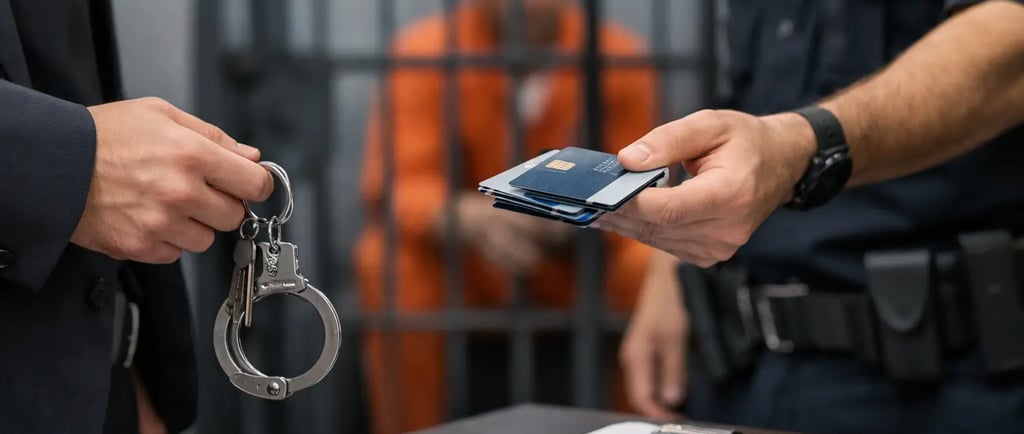
A late-night arrest call puts most families in the same spot fast: scared, confused, and asking one hard question - can you bail someone out without cash? In many cases, yes, but it depends on the bail amount, the jail, the court, and whether a bail bond company is willing to work with you. If you do not have the full amount sitting in your bank account, that does not always mean your loved one has to stay in jail.
What matters most is understanding the options quickly and choosing the one that fits the situation. Some release methods require the full bail amount up front. Others let you use a bond, collateral, or a payment arrangement instead of bringing a stack of cash to the jail.
Can you bail someone out without cash in Idaho?
Yes, you often can bail someone out without cash by using a bail bond rather than paying the full bail amount directly to the court. That is the main reason bail bond companies exist. They help people secure release when coming up with the entire bail amount on the spot is not realistic.
If bail is set at a level your family cannot pay in full, a licensed bail bondsman may be able to post the bond on the defendant's behalf. Instead of paying the whole amount to the court, you usually pay a nonrefundable premium for the bond. Depending on the circumstances, you may also need collateral or a co-signer.
This is often the most practical path for working families. A sudden arrest does not usually happen when money is easy to access. It happens in the middle of the night, on a weekend, or right before bills are due.
What your options usually look like
The answer depends on how the court set release conditions. Not every case is handled the same way, and that is where people get tripped up.
Cash bail
Cash bail means the court requires the full amount to be paid for release. If the bail is $5,000, that full $5,000 has to be posted. If the defendant appears in court as required, that money may be returned later, minus any court fees or deductions that apply. The problem is simple: many families do not have immediate access to that kind of money.
Bail bond
A bail bond is different. A bail bond company posts a surety bond for the full bail amount, and you pay a percentage of that amount as the bond premium. That premium is the cost of the service and is generally not refunded. For many people, this is the only realistic way to get someone out quickly.
Own recognizance or supervised release
In some cases, the court may release someone on their own recognizance, meaning no cash bail is required. The defendant promises to appear in court. Sometimes supervised release conditions are added, such as check-ins, travel restrictions, or GPS monitoring. This option is not something a family can choose on its own - it has to be approved by the court.
How a bail bond helps when money is tight
If you are trying to figure out whether you can bail someone out without cash, what you are really asking is whether there is a way to secure release without paying the entire amount up front. A bail bond is often the answer.
Here is the practical difference. If bail is set at $10,000, paying cash bail means producing the full $10,000. With a bond, you may only need to pay the bond premium and meet any co-signer or collateral requirements. That lowers the immediate financial burden, even though it does not erase the responsibility.
This matters because speed matters. The longer someone sits in jail, the more life starts to unravel. People miss work, child care gets disrupted, and court preparation becomes harder. A faster release can make a real difference.
When collateral may be required
No-cash does not always mean no security at all. In some cases, a bondsman may ask for collateral, especially if the bond amount is high, the risk is greater, or the defendant has a history of missing court.
Collateral can take different forms. It might be a vehicle title, real property, jewelry, firearms, or another item of value. The purpose is to protect the bond company if the defendant fails to appear and the bond is forfeited.
This is one of the biggest trade-offs families need to understand. A bond can reduce the cash you need right now, but it may still require you to put something on the line. That is why it is important to ask direct questions before signing anything.
Can you use a payment plan instead?
Sometimes, yes. Some bail bond companies offer payment plans for qualified clients. That can be a major help if you have income coming in but cannot cover the premium all at once.
Approval usually depends on the details of the case, the amount of the bond, the strength of the co-signer, and the defendant's background. A payment plan is not automatic, and the terms can vary. Still, for many Idaho families, it is the difference between getting help now and feeling stuck.
If a company offers flexible payment options, ask what is due up front, how often payments are made, and what happens if a payment is missed. That part matters just as much as the initial release.
What can stop a release, even without cash?
Families are often surprised to learn that money is only one part of the process. Even if you find a way to cover the bond premium, release is not guaranteed the second you call.
The jail has to process the paperwork. The defendant may have holds from another county, another state, immigration issues, probation violations, or additional charges. In some cases, the court may set conditions that make release slower or more complicated.
That is why local experience matters. A bail agent who regularly works with Idaho jails and courts can usually spot delays faster and explain what is actually causing the holdup.
Questions to ask before you agree to a bond
When you are under stress, it is easy to focus only on getting your person out. That is understandable. But a few clear questions can save you trouble later.
Ask how much is due now, whether the premium is refundable, whether collateral is required, and what responsibilities fall on the co-signer. Ask what happens if the defendant misses court. Ask whether there are monitoring conditions or extra fees tied to the release.
A professional bail bond company should answer those questions plainly. You should not have to guess what you are signing.
The role of the co-signer
If you are trying to bail someone out without cash, you may also be the one asked to co-sign. That is a serious commitment. You are not just making a phone call for a friend or relative. You are taking legal and financial responsibility tied to that bond.
If the defendant skips court, the consequences can fall on you. That can include loss of collateral and other financial exposure, depending on the agreement. Before you co-sign, be honest with yourself about whether the defendant is likely to follow the court's rules.
This is where emotions and reality can clash. Wanting to help someone is one thing. Trusting them to appear in court is another.
What to do right now if you need help fast
Start with the basics. Find out where the person is being held, what charges were filed, and whether bail has been set. If bail is set, get the amount and ask whether there are any special conditions on release.
Then speak with a licensed bail bondsman who can explain your real options based on the case. If you are in Boise, Meridian, Caldwell, Mountain Home, or nearby Idaho communities, working with a local team like Idaho Bonding Company can make the process move faster because they understand the local system and how to act quickly when time matters.
Bring or be ready to provide basic information about the defendant, your identification, and any financial or collateral details if requested. The sooner that information is available, the sooner the process can move.
The short answer families need
So, can you bail someone out without cash? Often, yes - but not by skipping responsibility. What usually makes it possible is a bail bond, sometimes backed by a co-signer, collateral, or a payment plan. The right option depends on the bail amount, the case, and whether the release conditions can be met.
If you are in that position right now, do not assume you are out of options just because you do not have the full bail amount in hand. The smartest next step is to talk to someone who can tell you, plainly and fast, what it will take to bring your loved one home.
Contact us!
Local • Reliable • Experienced • Fast
Contact us anytime at 208-890-2339 or info@idahobondingcompany.com
We proudly serve Boise, Meridian, Caldwell, Payette, Mountain Home, Idaho Falls, Sun Valley, Coeur d'Alene, Wallace, Mccall, Murphy and all of Idaho.
Call us if you need information or are ready to meet a licensed bail bondsman. We serve Boise, Meridian, Caldwell, Twin Falls, Mountain Home, Coeur d'Alene and all of Idaho. We are available 24 hours a day.
Boise Office:
2604 N Cole RD
Ste 100
Boise ID 83704
Mountain Home:
155 E 2nd N St
Mountain Home ID 83647